You Found Something. Here's What to Do Next.
A simple guide for Australian beachcombers, from the moment you pick it up to getting a free expert assessment.
Start with the Checklist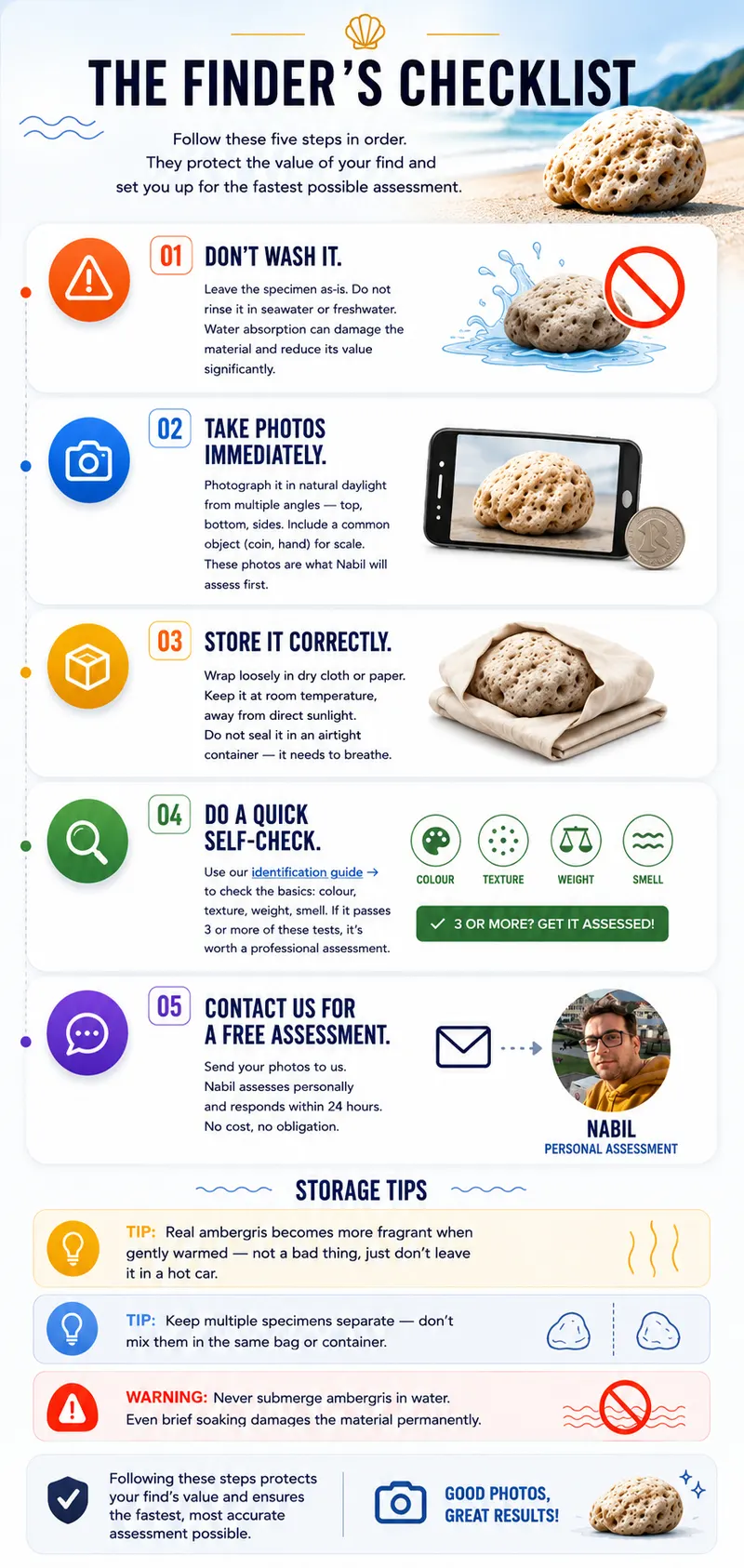
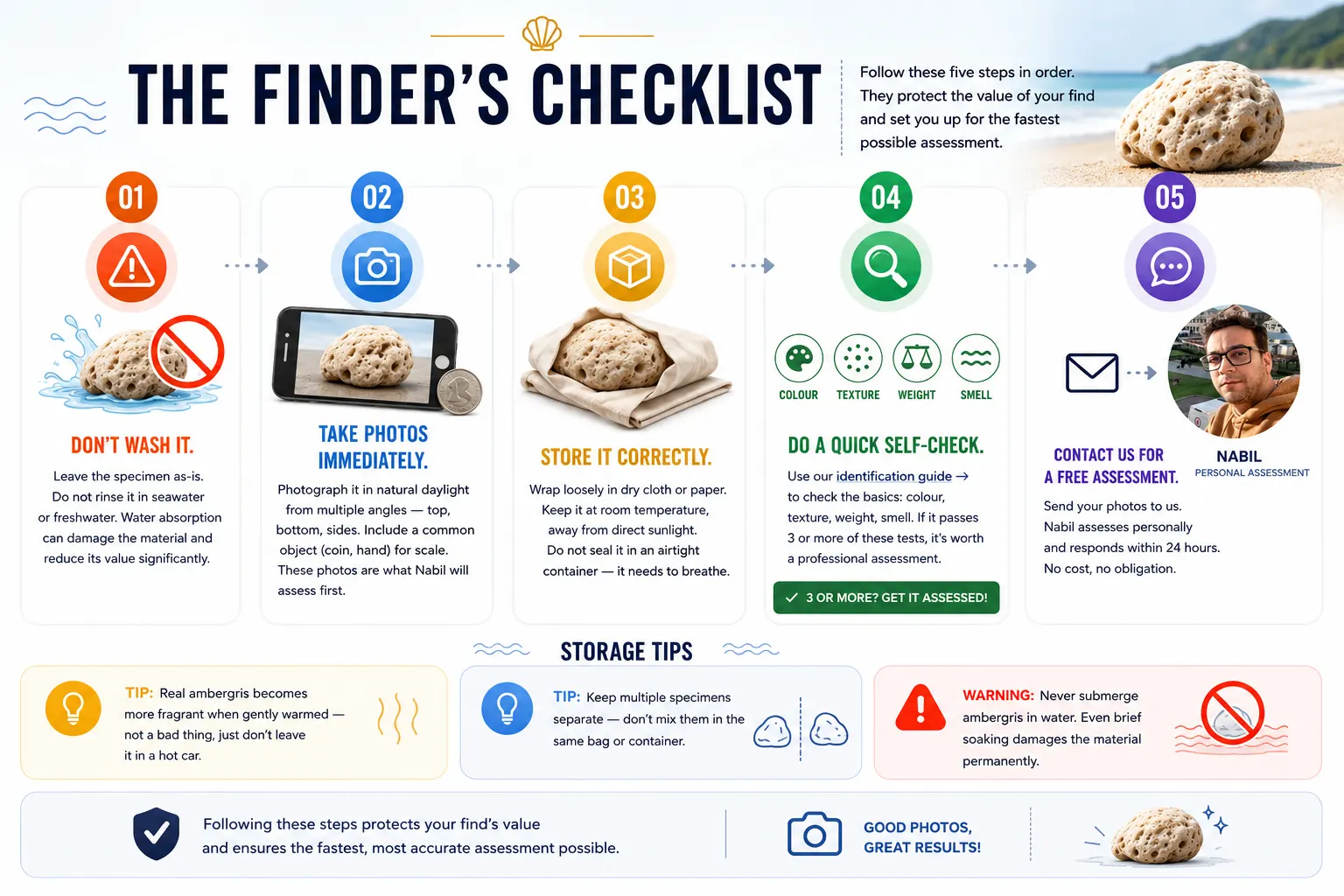
Quick Recap
Follow these five steps in order. They protect the value of your find and set you up for the fastest possible assessment.
Be Careful With Unknown Beach Lumps
Australian beaches can also receive tar balls, fatbergs, palm oil residue, and other marine debris. If the object smells strongly of petroleum, sewage, chemicals, or rancid oil, avoid direct handling. Use gloves or a tool, take photos, and do not cut or break it open. Not sure what you found? Compare it against common beach lookalikes first.
Storage Tips
Tip: Real ambergris becomes more fragrant when gently warmed. That is not a bad thing. Just don't leave it in a hot car.
Tip: Keep multiple specimens separate. Don't mix them in the same bag or container.
Warning: Never submerge suspected ambergris in water. Even brief soaking can permanently damage the material.
How to Photograph Your Find
For the best assessment result, send us the following:
- 3–5 images in natural daylight, not flash
- Top view, side view, and close-up of surface texture
- One image with a coin, ruler, or hand for scale
- One image showing the underside
- If possible, a short video gently pressing the surface with your thumbnail
- Approximate weight if you have a kitchen scale
- General beach area or region where it was found
Found Something Already?
Send us your photos and Nabil will give you an honest answer. Free, no obligation.